Hard water can leave mineral scale on fixtures, affect how soap performs, and contribute to buildup in water-using equipment. When comparing a water softener vs. a water conditioner, the key difference is whether the system actually reduces hardness minerals such as calcium and magnesium or uses another method to manage their effects. Rainsoft A & B Marketing can help homeowners test their water and compare treatment options based on the conditions found in the home.
In a water softener vs water conditioner comparison, the central question is what happens to hardness minerals such as calcium and magnesium. A conventional ion-exchange softener removes much of those minerals from the water. Many alternative conditioners aim to change how minerals behave or form scale, rather than remove them. That distinction affects what you can expect at home.
Below, we explain how these approaches work, what they may address, and how water test results can help narrow down your options. At Rainsoft A & B Marketing, we encourage homeowners to understand their water before deciding which treatment system fits their household.
What Is Hard Water?
Hard water contains dissolved minerals, most notably calcium and magnesium. These minerals are naturally present in many water sources. As water moves through soil and rock, it can pick up mineral content on the way to a well or municipal supply. Hardness is commonly measured in grains per gallon or milligrams per liter, and a water test can show how much is present in a specific home.
Hard water is not automatically unsafe to drink. Its effects are more commonly noticed in daily household tasks and plumbing. Minerals can leave deposits on fixtures and glassware, contribute to scale in water-using appliances, and make soap less effective. The degree of impact depends on the water’s mineral level, temperature, flow, and how often water is used.
How Does a Water Softener Work?
Ion exchange removes hardness minerals
A traditional water softener uses a process called ion exchange. Water flows through a tank containing resin beads that hold sodium or potassium ions. As calcium and magnesium pass over the resin, the beads exchange those hardness minerals for sodium or potassium ions. The treated water then continues through the home’s plumbing.
Over time, the resin collects calcium and magnesium and needs to be regenerated. During regeneration, a brine solution rinses the resin and restores its ability to exchange ions. The system sends the rinse water to a drain. Regeneration schedules and salt use vary by equipment, water quality, and household demand, so system selection and setup matter.
What softening can and cannot do
Because ion exchange reduces hardness minerals, a softener can help limit the mineral deposits associated with hard water. Many households also notice differences in soap use, laundry feel, and spots on surfaces. Results vary, and a softener is not a substitute for every type of water treatment.
A standard ion-exchange softener is designed to address hardness; it does not, by itself, remove every possible contaminant. It is not necessarily a solution for sediment, bacteria, particular chemicals, or dissolved substances such as iron at all concentrations. The system’s capabilities depend on its design and the incoming water. Testing is important so treatment is selected for the water condition rather than assumed.
How Does a Water Conditioner Work?
Water conditioner is a broad term rather than one specific technology. It can describe systems that use different methods to address scale or other water characteristics. Some products are designed to alter scale formation. Others may use filtration, media, or another treatment process. Because the term covers varied technologies, it is essential to ask what a particular system does and how that claim is measured.
Conditioning is not always mineral removal
Some non-ion-exchange systems are intended to alter the way calcium and magnesium behave, so they may be less likely to adhere to surfaces as hard scale. In those cases, the minerals can remain in the water. The aim is to manage scaling, not to produce softened water by removing hardness ions.
Other systems may remove specific substances if they are designed and certified to do so, but that does not mean every conditioner removes hardness minerals. A conditioner’s performance depends on its technology, operating conditions, and the water being treated. We recommend checking the manufacturer’s documentation and asking what the system is intended to reduce, what remains in the water, and what verified performance claims.
Water Softener vs Water Conditioner: Key Differences
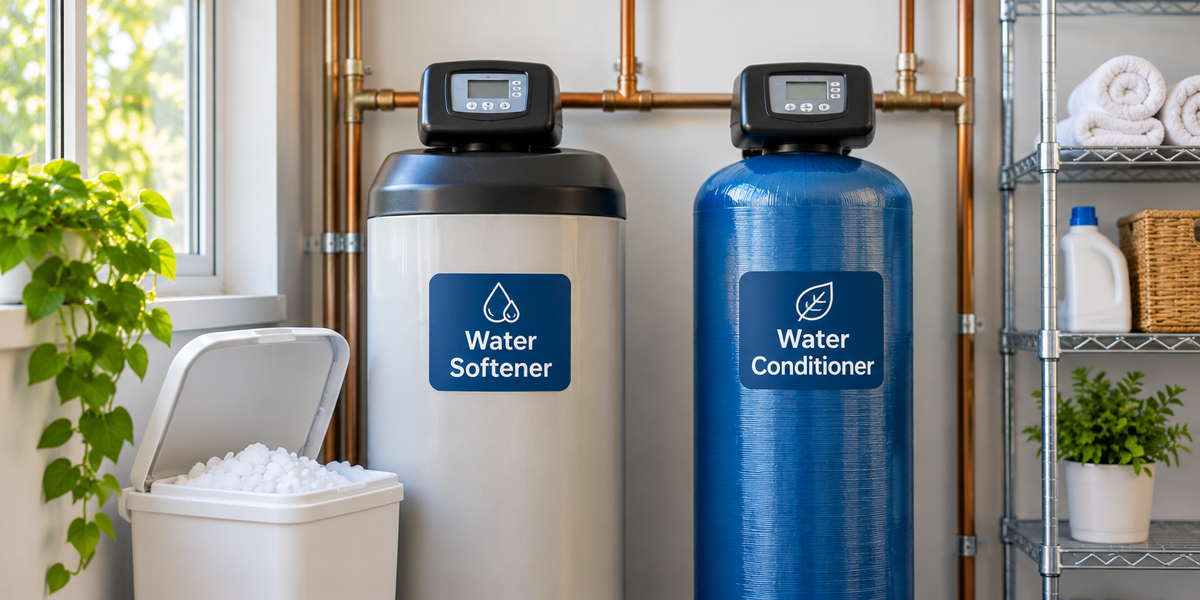
The practical difference between water softener and conditioner is often whether the system removes hardness minerals or manages their effects while leaving them present. A softener using ion exchange reduces calcium and magnesium. A scale-focused conditioner may help control deposits without changing the water’s hardness in the same way.
- Primary approach: Ion exchange swaps calcium and magnesium for sodium or potassium ions. Alternative conditioning technologies use different processes and may not remove hardness.
- Hardness readings: A softener typically lowers measured hardness after treatment. A conditioner may leave the hardness reading largely unchanged, depending on its technology.
- Salt and regeneration: Many ion-exchange systems use salt or potassium chloride and periodically regenerate. Other conditioning systems may have different maintenance requirements.
- What is treated: Both categories vary by model. Neither label alone tells you whether a system addresses sediment, chlorine, iron, or other water-quality concerns.
- Household priorities: The best fit depends on test results, the problems you want to address, maintenance preferences, and the system’s stated capabilities.
These distinctions are useful, but they should not be treated as a universal promise about every product. Product names can be used differently by manufacturers. Compare the actual treatment method and performance information, not just the word “conditioner” on a label.
Choosing Among Hard Water Treatment Options in Florida
Homeowners considering water conditioning systems in Florida should start with the water entering their home. Water characteristics can differ by location and supply source, and conditions can vary between municipal water and private wells. Even neighbors may have different plumbing, fixtures, or treatment needs. A recent, reliable test gives you a better basis than assumptions based on geography alone.
Use water test results to guide the decision
A water analysis can help identify hardness and may reveal other characteristics that affect equipment selection. Depending on the source and concerns, a professional may recommend additional testing for issues such as iron, sediment, pH, or disinfectant residuals. Not every home needs every test or treatment. The goal is to understand the water first, then select equipment based on what the results show.
For example, a household mainly concerned about mineral scale and soap performance may want to compare a softener with a scale-management conditioner. A home with a separate concern, such as sediment, may need a different or additional treatment stage. A single system should not be expected to solve every water-quality issue unless its specifications support that use.
Consider maintenance and household preferences
Think about how much maintenance you are comfortable with, where equipment can be installed, and whether your household has preferences about salt use. Ask how often a system needs attention, what supplies it requires, and what the expected service schedule looks like. Also confirm whether the system is sized for the number of people in the home and typical water use.
For people searching for a water softener Jacksonville solution, local service and a clear installation plan may also matter. Ask who will assess the water, explain the recommendations, install the equipment, and answer questions after installation. A system is only a good fit when its capabilities align with the water and the household’s expectations.
Questions to Ask Before Buying
Comparing systems is easier when you ask the same practical questions about each option. Request straightforward explanations and, where possible, written product specifications.
- What treatment technology does this system use?
- Does it remove calcium and magnesium, or is it designed to manage scale while leaving those minerals in the water?
- Which specific water concerns is the system designed to address?
- What does it not remove or change?
- How will our water test results affect equipment selection and setup?
- What maintenance, supplies, or periodic service will the system require?
Clear answers help prevent mismatched expectations. For instance, a system intended to reduce scale may not make water tests as soft as water treated by ion exchange. Knowing that before installation lets you judge the system by the outcome it was designed to provide.
Explore Water Softener Systems and Water Testing
If your test results indicate that reducing hardness minerals is a priority, explore Rainsoft A & B Marketing’s Water Softener Systems to learn more about available options. We can also help you understand how a system’s features relate to your household’s water and daily needs.
When you are unsure where to begin, a free in-home water analysis can provide useful information about your water. Testing does not mean you need to choose a particular system. It gives you a basis for discussing treatment options, comparing technologies, and deciding what makes sense for your home.
Make the Choice Based on Your Water
There is no single answer to the water softener vs water conditioner question. Ion-exchange softeners reduce hardness by exchanging calcium and magnesium for other ions. Alternative conditioners may focus on scale management or other water characteristics, and many do not remove hardness minerals. The right choice depends on the actual technology, the water test results, and the problems you want to solve.
By comparing system specifications, asking what each option does and does not remove, and reviewing your home’s water analysis, you can compare the options. Our team at Rainsoft A & B Marketing is available to help explain the options and connect treatment recommendations to your household’s water needs.
Not sure which hard water treatment option fits your home? Contact Rainsoft A & B Marketing to discuss your water concerns and compare treatment technologies based on your actual water conditions.